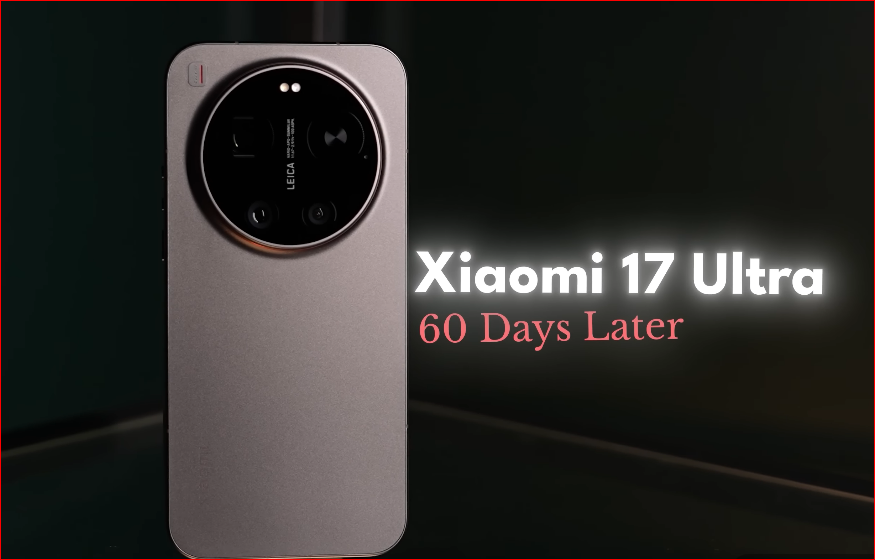
2026 really should be the year of Ultra phones in India, and if there is one phone that deserves way more attention than it is getting, it is the Xiaomi 17 Ultra.
After living with it for 60 days, the big takeaway is simple. For the price it is currently selling at, and for what it brings to the table, this feels like one of the most sensible Ultra phones you can buy right now. Not perfect, no. But seriously well judged.
What makes it interesting is that Xiaomi has not just chased spec-sheet glory here. It has built a phone that actually feels usable day to day, while still giving you the kind of camera hardware and flagship experience you expect from an Ultra.
Design That Feels Better Than It Needs To
With Ultra phones, design is not just about looks. It is about whether the phone feels annoying or easy to live with every day. That matters more than people admit.
The Xiaomi 17 Ultra looks good by default, but the real surprise is how comfortable it is in hand. My biggest concern going in was the rear camera module. Ultra phones with giant camera islands often pick up scratches easily, especially when that large glass sits exposed on tables and other flat surfaces.
That has not really been the case here.
Xiaomi uses Corning Gorilla Glass 7i on the camera module itself, and after 60 days it has held up very well. No obvious scratches, no major cosmetic drama. The rest of the body has also stayed sturdy.
Even better, the camera module does not protrude as aggressively as you might expect from a phone carrying a 1-inch sensor and a periscope camera with a moving lens. It slips into a jeans pocket without feeling awkward, which is not something you can say about every Ultra.
The placement is smart too. Because the camera module sits centrally, your index finger naturally rests against the lower part of it. That actually makes the phone feel more secure in use.
The frame has micro-curved edges and is made of aluminum, so the in-hand feel is genuinely excellent. Honestly, this is one of the nicest Ultra phones to hold.
Fiberglass Back: Cost Cutting or Smart Decision?
The back is aerospace-grade fiberglass, not glass. On paper, that might sound like a compromise, and yes, a glass back would have made it feel a bit more premium.
But in context, this was probably the right call.
Ultra phones with huge camera sensors can become heavy bricks very quickly. Compared to something like the Vivo X300 Ultra or the Find X9 Ultra, the Xiaomi 17 Ultra feels noticeably lighter. You can genuinely feel that difference in everyday use.
Yes, the S26 Ultra is lighter still, but then you are also looking at a smaller battery and smaller sensors. Context matters a lot with these comparisons.
Build Quality and Practical Details
The rest of the build is properly flagship-grade:
- IP69 rating
- USB 3.2
- Clicky round volume buttons
- Solid overall structural feel
The only ergonomic gripe is that the power and volume buttons sit a little too close to each other. If you have larger fingers, it is possible to press the wrong one by mistake.
So overall, the design is functional, thoughtful, and comfortable. It may not scream luxury in every material choice, but it gets the important stuff right.
The Cameras Are Why This Is an Ultra
The Xiaomi 17 Ultra earns the Ultra badge because of its cameras. That is really the heart of this phone.
There are two standout reasons for that.
- It is the world’s first 1-inch sensor phone with a Lofix sensor.
- It has the world’s first 200 MP continuous optical zoom camera.
That zoom system covers a focal range from 75 mm to 100 mm, which roughly translates to 3x to 4x continuous optical zoom. That means you are not locked into just one or two zoom steps. You can shoot in between those focal lengths and still get genuinely strong image quality.
The complete camera setup looks like this:
- 1-inch main sensor with Lofix
- 200 MP continuous optical zoom periscope camera
- 50 MP ultrawide camera
- 50 MP front camera
Low Light Is Where the Main Sensor Really Shows Off
Low light is where this camera system becomes seriously impressive.
Shoot a subject against harsh backlight, or put it in difficult evening conditions that would normally expose every weakness of a smaller sensor, and the Xiaomi 17 Ultra shows a level of control that stands out immediately.
The Lofix implementation feels like something more Ultra phones should adopt. It gives the camera a visible edge in difficult scenes, especially where dynamic range and light handling matter most.
The end result is the kind of low-light photography that makes people throw around phrases like DSLR replacement. To be clear, that does not mean it literally replaces a DSLR. But it absolutely produces images that look rich, dramatic, and far more camera-like than what many phones manage.
Leica Filters Add Character, Not Gimmicks
One of the most enjoyable parts of using the Xiaomi 17 Ultra camera is the Leica partnership, especially the filters.
The black and white high contrast mode and the sepia options feel surprisingly authentic. These are not flat, throwaway effects. They add mood, warmth, and a sense of character that actually makes you want to keep shooting.
If you prefer a more grounded tuning, you can switch to Leica Authentic. That mode does introduce some vignetting in the corners, which you should know going in, but it still looks very good. And if you want to fine-tune the final image, you can always adjust the colors later.
Portraits and Selfies Are Better, With One Caveat
Xiaomi has improved portrait mode in meaningful ways.
Edge detection is better. Bokeh falloff looks more natural. Subject separation is more convincing. So this is not a token portrait implementation. It is actually doing a good job.
The one thing to keep in mind is that portrait mode still tends to brighten skin tones slightly. The same issue shows up on the selfie camera too. If you are someone who prefers more neutral skin rendering, that is worth knowing before you buy.
Continuous Optical Zoom Is the Real Party Trick
The 75 mm to 100 mm continuous optical zoom system is one of the most interesting things about this phone.
Because it covers that in-between range, shots at focal lengths like 3.1x or 3.2x still retain very good quality. That gives the camera a lot more flexibility compared to fixed-step telephoto systems.
Beyond 100 mm, up to around 10x, results are still fine. Past that, AI enhancement starts stepping in more noticeably. That said, Xiaomi handles AI zoom better than most.
It feels restrained.
It does not aggressively create fake-looking zoom shots. It avoids overprocessing, which is exactly what you want. And if you do not want AI intervention, you can disable it.
Video Recording Holds Its Own
Video recording has been consistently solid too. The Xiaomi 17 Ultra can compete with phones like the iPhone 17 Pro Max in this area, if not outright beat them in certain situations.
So this is not a phone that only shines in still photography. It is a proper all-round flagship camera system.
Performance Is Strong, But Not Flawless
On the performance side, the Xiaomi 17 Ultra gets most things right.
You are getting:
- Snapdragon 8 Gen 5
- 16 GB LPDDR5X RAM
- 512 GB UFS 4.1 storage
That is proper flagship hardware, especially when some competing Ultra phones launched with only 12 GB RAM variants.
In daily use, the experience is effortlessly smooth. Scrolling is fluid, multitasking is quick, and app switching feels instant. Synthetic benchmarks like AnTuTu and Geekbench are also right in line with what you would expect from this class of phone.
Gaming Performance
Extended gaming is where a few cracks start to show, though not enough to become a deal-breaker.
In testing:
- Wuthering Waves averaged 55.8 FPS over 30 minutes at 60 FPS settings
- Arknights Endfield averaged 59.3 FPS over the same duration
Those are genuinely good numbers.
Temperatures rose to around 42 to 43 degrees Celsius, which is still acceptable and under the 45-degree mark where things start feeling more uncomfortable. So yes, it gets warm, but not alarmingly so.
Camera Heating Needs Attention
The more important thermal note is that the phone can heat up faster than expected during longer video recording sessions.
That does not ruin the experience, but it is something to keep in mind if you plan to do a lot of extended camera work.
Connectivity Is Reliable
Network performance has been solid with both Jio and Airtel. No notable issues there.
You also get eSIM support, which is a useful bonus for frequent travelers, even if it is becoming standard on many Ultra phones now.
Battery Life Is Good, But It Should Have Been Better
This is one area where the Xiaomi 17 Ultra surprised me a bit, and not entirely in a good way.
On paper, the phone has a 6,000 mAh silicon-carbon battery, which sounds excellent. In practice, screen-on time has been around 6 to 6.5 hours.
That is respectable. It is not bad. But given the battery size, expectations naturally go higher. You do walk away feeling like it should have delivered a bit more.
The good news is Xiaomi makes up for some of that with charging.
- 100W wired charging support
- Charger included in the box
- 50W wireless charging support
That wired charging speed gets the 6,000 mAh battery topped up in under an hour, which is excellent for a battery this size. The 50W wireless charging is also there if you want it, though the compatible wireless charger needs to be bought separately.
So battery life itself is a bit middling relative to expectations, but charging is absolutely flagship-level.
The Display Is Pure Flagship Show-Off Material
If the cameras justify the Ultra branding, the display is where Xiaomi simply flexes.
Xiaomi has always been strong with displays, and the panel on the 17 Ultra is stunning.
You get a 6.9-inch Hyper RGB AMOLED display with very slim bezels, so the screen estate feels expansive and premium right away.
More importantly, this is a proper 12-bit AMOLED panel. Not an 8-bit panel doing tricks to approximate the experience. A real 12-bit panel makes a difference in gradients, color transitions, and overall richness.
With up to 3,500 nits peak HDR brightness, Dolby Vision content on Netflix looks superb. Gradients are smooth, colors are vibrant without looking cheap, and there is a lot of depth to the image. It has the sort of tuning that reminds you of an expensive OLED TV.
Other display features are equally strong:
- LTPO 120Hz refresh rate
- 2160Hz PWM dimming
- Xiaomi Shield Glass 3.0
Xiaomi claims the Shield Glass 3.0 offers 3x better drop resistance compared to the previous generation, and over long-term use it also seems to resist micro-scratches well. After 60 days, there were very few visible signs of wear on the display.
Haptics, Fingerprint Scanner, and Speakers
The supporting hardware is equally impressive.
The haptic feedback is excellent. The ultrasonic in-display fingerprint scanner is reliable and premium. And the stereo speakers are loud, rich, and detailed.
With Dolby Atmos support, the audio experience is genuinely strong. This is a phone that feels flagship not just on the spec sheet, but in the little touches you notice every day.
HyperOS Has Features, but It Still Needs Polish
Software is where the conversation gets a little more nuanced.
HyperOS on the Xiaomi 17 Ultra is packed with features. In terms of sheer functionality, it is one of the more complete software packages in the segment.
You get:
- Customizable lock screen
- Hyper Island
- AI Writing
- AI Interpreter
- AI Erase Pro
- Circle to Search
- Gemini support
- Cross-device ecosystem features
One of the more interesting bits is Xiaomi’s interoperability with Apple devices. You can connect into that ecosystem in ways most Android brands still do not offer, including using a MacBook’s fingerprint reader to unlock the phone. That is genuinely cool.
AirDrop-style compatibility is also there, though that is becoming more common across Android brands.
So yes, the feature set is strong. Very strong. The lock screen customization in particular is excellent.
The Quirks
That said, HyperOS is not perfectly refined yet.
The overall UI design could still feel a bit more polished. That is subjective, of course, but it is hard not to feel that Xiaomi is just a few refinements away from something truly top-tier.
There are also occasional small bugs. For example, swiping down on the home screen to bring up the app finder does not always behave consistently with the keyboard.
Nothing here feels disastrous. These are not device-breaking problems. But they are worth acknowledging.
The Good News for Indian Users
The Indian version of HyperOS is actually much better than its reputation suggests.
There are no pre-installed bloatware apps. You still get some third-party apps, but it is not cluttered the way Xiaomi software used to be. There is also no GetApps mess crowding the app drawer out of the box.
That gives the Xiaomi 17 Ultra a much better software starting point than many people might expect.
So, Is the Xiaomi 17 Ultra the Best Value Ultra Right Now?
Honestly, it has a very strong case.
When you look at what this phone offers, the value becomes obvious:
- 1-inch Leica camera system
- Lofix sensor technology
- 200 MP continuous optical zoom camera
- Strong flagship performance
- Beautiful 12-bit AMOLED display
- Fast wired and wireless charging
- Solid long-term build quality
Yes, there are compromises.
- Fiberglass back instead of glass
- Battery life that is good, not exceptional
- Occasional software quirks
- Some heating in longer camera sessions
But these feel manageable. They do not undercut the core identity of the phone.
And that is what matters.
The Xiaomi 17 Ultra delivers a proper Ultra experience without the usual Ultra price guilt. At launch, it may have felt expensive to some people. In the current market, it really does not.
That is exactly why this phone feels underrated. It is not trying to be flashy for the sake of it. It is just giving you a lot of meaningful flagship hardware at a price that makes more sense than many of its rivals.
Final Verdict
The Xiaomi 17 Ultra is not flawless, but it gets the big things right.
It has excellent cameras, one of the best displays in the category, strong performance, useful ecosystem features, and a design that is far more practical than many other Ultra phones. If your priorities are camera hardware, display quality, and overall flagship value, this phone absolutely deserves to be on your shortlist.
For anyone looking for the most value-for-money Ultra phone right now, the Xiaomi 17 Ultra is very easy to recommend.
And yes, it probably deserves a lot more attention than it is getting.