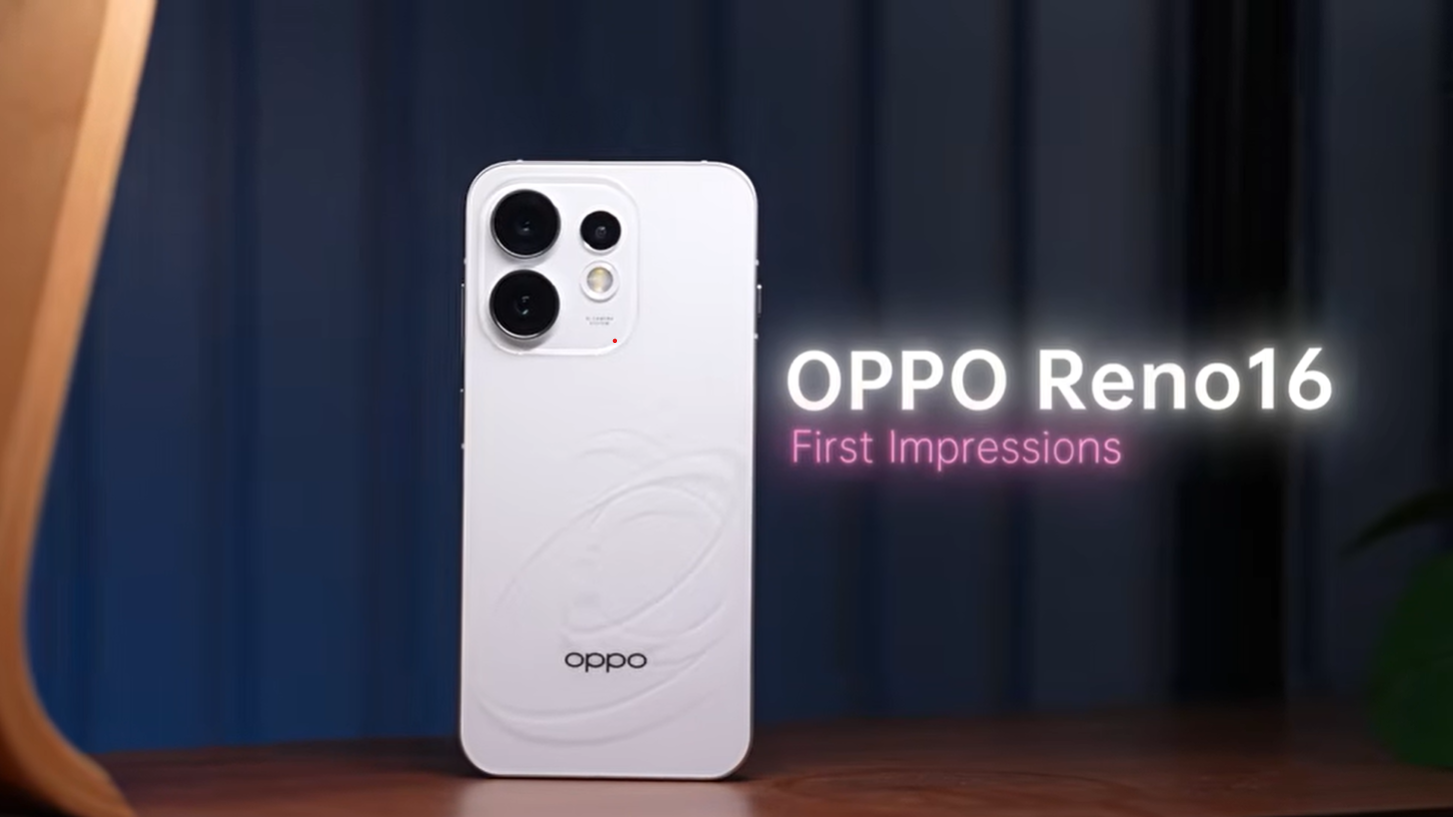
The OPPO Reno 16 gets one thing right immediately: it feels different in a segment where many phones are chasing raw performance and little else. This one goes in another direction. It focuses on comfort, camera experience, polish, and a few genuinely fun ideas, including one of the quirkiest accessories I have seen in a while.
After spending time with the phone, what stood out most was not just one headline feature. It is the overall balance. The Reno 16 is compact, premium, durable, has a very good display, dependable battery life, strong cameras, and a software experience packed with features. It is not perfect, and the pricing will definitely be part of the conversation, but as a product, it does more right than you might expect.
Design: Compact, premium, and finally very comfortable to use
The first thing you notice about the Reno 16 is the size. OPPO has made it a compact phone now, and that move works really well. It sits comfortably in the hand, gives you a secure grip, and feels much easier to manage than larger devices that dominate this price bracket.
The in-hand feel is strong too. You get a glass sandwich design with a metal frame, so it has that premium touch you want from a phone in this segment. The buttons are tactile, satisfying to press, and the overall finish feels refined.
The real star of the design, though, is the Starry White variant. The back panel has a dynamic cosmic 3D design that genuinely stands out in person. It creates a proper 3D visual effect that is hard to fully capture in photos. This is one of those finishes you need to see physically to appreciate. It looks distinctive and a lot more interesting than the usual plain back panels.
The other color options, Twilight Violet and Stellar Purple, also have patterns on the back, but they use a composite material instead of glass and they do not offer the same 3D effect. If design matters to you, the white version is clearly the one to pick.
Durability and practical touches
OPPO has also loaded this phone with serious protection. The Reno 16 comes with IP66, IP68, IP69, and IP69K ratings, which makes it impressively durable. On top of that, it gets Corning Gorilla Glass 6 equivalent Crystal Guard protection, and it held up well during regular use.
You also get a few useful extras:
- IR blaster
- AI Snap Key for the first time on a Reno phone
- USB Type C 2.0 at the bottom
- Hard silicone case in the box
One more thing deserves a special mention: the haptics. The vibration motor and the tuning are excellent. Proper flagship-grade good. Notifications and calls are easy to notice, and the feedback feels crisp and polished throughout the interface.
Display: A Goldilocks-sized screen that gets the basics right
OPPO has shrunk the display to 6.32 inches, and honestly, this feels like the sweet spot. It is compact enough to make the phone easy to hold, but still large enough to enjoy media, browse comfortably, and get work done.
The bezels are slim and symmetrical, which improves the premium look and makes the front of the phone feel clean. More importantly, the panel itself is very good.
You get a 1.5K AMOLED display with:
- Vibrant colors
- Excellent contrast
- HDR support on YouTube and Netflix
- Up to 3,600 nits peak brightness
- 1,800 nits HBM brightness, up from 1,200 nits on the previous model
That increase in high brightness mode makes a difference outdoors. Sunlight legibility is pretty solid, so using the phone under harsh light is not a struggle.
For multimedia, the stereo speakers are also good. Pair that with the AMOLED panel and compact size, and the Reno 16 becomes a very enjoyable phone for everyday content consumption.
The optical in-display fingerprint scanner is here too, and it works fine.
Performance: Good enough for everyday use, but not a gaming-first phone
Inside the Reno 16, OPPO is using the Snapdragon 7 Gen 4, paired with 8GB LPDDR5X RAM and 256GB UFS 3.1 storage. This is the same chipset seen before, so expectations should be set accordingly.
This is an upper mid-range processor, and it behaves like one. Benchmark scores line up with what other Snapdragon 7 Gen 4 phones deliver. In CPU throttling tests, the chip dropped to 66 percent, which could have been better. On the GPU side, though, the results were stronger, with 97.7 percent stability in 3DMark.
Gaming performance
For gaming, the Reno 16 is decent without trying to be a gaming phone.
- Genshin Impact supports 60 FPS and averaged close to 49 FPS in testing
- BGMI supports 90 FPS on smooth graphics
- Call of Duty can hit 120 FPS
Thermals are controlled well too, staying around 38 to 39 degrees Celsius, which is good news for longer sessions.
The key point is simple: if you expect a performance-focused device, this is not that. But if you want a smooth daily-use phone with enough power for regular apps, social media, camera use, and occasional gaming, the Snapdragon 7 Gen 4 does the job well enough.
Battery life and charging: One of the most dependable parts of the phone
The Reno 16 packs a 6,700mAh silicon carbon battery, and battery life is one of its stronger advantages. In regular use, it consistently delivered around 7 to 8 hours of screen-on time, which is very respectable.
Charging is handled by a bundled 80W SuperVOOC charger, and a full charge takes about an hour. That is a practical combination: a large battery that lasts long and fast charging when you need to top up quickly.
Connectivity: Mostly good, but one omission matters
The connectivity package includes:
- Wi-Fi 6
- Bluetooth 5.4
- LDAC support
- LHDC codec support
But there is one notable omission: NFC. If tap-to-pay matters to you, this could be a deal-breaker. In 2026, leaving out NFC on a phone in this category is definitely something to think about seriously.
OPPO Bubble: Fun, useful, and surprisingly clever
The most playful part of the Reno 16 experience is the OPPO Bubble. At first glance, it looks like a handbag charm or keychain accessory, and yes, it can function like one. But it is also proper tech.
Snap it onto the back of the phone and it turns into a live viewfinder for the rear cameras. That means you can use the better rear cameras for selfies instead of relying only on the front camera.
That opens up a few useful possibilities:
- Use the primary rear camera for better selfies
- Use the 3.5x telephoto camera creatively
- Use the ultra-wide camera for group selfies
- Use it as a remote shutter button
The Bubble itself has an AMOLED display, which makes the whole thing look surprisingly polished. There are multiple animated wallpapers, and custom wallpapers can be added too.
It has its own 560mAh battery and charges through the USB Type C port on the accessory. If you are using it mainly as a live camera tool, battery life is around 7 to 8 hours.
It is one of those accessories that sounds gimmicky at first, but once you understand what it enables, especially for selfies and content capture, it starts making a lot of sense.
Cameras: The standout feature of the Reno 16
If there is one area where the Reno 16 really shines, it is the camera system. The hardware is solid across the board:
- 50MP Sony LYT-600 primary camera
- 50MP ultra-wide camera, upgraded from the 8MP ultra-wide on the Reno 15
- 50MP 3.5x telephoto camera using the Samsung JN5 sensor
- 50MP front camera
Photo quality across zoom levels
One thing OPPO has done very well here is consistency. Whether you shoot at 0.5x, 1x, 2x, 3.5x, 7x, or even 10x, detail remains fairly consistent and there is no ugly over-sharpening ruining the images. That matters a lot because many phones try to fake sharpness too aggressively.
Colors are also handled well. They are vibrant and punchy, but not all over the place from one lens to another. That consistency makes the overall camera system feel more reliable.
Portraits, skin tones, and HDR
Portrait shots are sharp, and edge detection is excellent. OPPO has been doing a very good job here, and the Reno 16 continues that trend.
The phone also uses OPPO’s natural tone algorithm, which helps keep skin tones close to neutral. They may not always be perfectly neutral, but they are handled very well overall.
HDR performance on the primary and ultra-wide cameras is impressive too. Bright backgrounds are controlled well, and blooming around hair is minimal, which is not always easy to achieve.
Low light and macro
Low-light photography is another strength. The Reno 16 brightens scenes effectively without destroying subject detail, so night shots still retain useful texture and clarity.
Macro photography is especially impressive with the 3.5x telephoto camera. This kind of setup often delivers more flattering and more practical close-up shots than the usual low-quality dedicated macro sensors found on many phones.
Selfies
The 50MP front camera does a good job, especially with natural-looking skin tones. OPPO has also added a 0.6x or 18mm ultra-wide selfie option, which is genuinely useful for group shots.
That said, if selfies are a major priority, pairing the phone with the OPPO Bubble and using the rear cameras is clearly the better setup.
Video recording: Smooth lens switching and strong stabilization
All lenses support 4K at 60 FPS, which is great to see. Even better, lens switching during video recording is exceptionally smooth. That adds a level of polish that many phones still miss.
Stabilization is excellent, even with ultra steady turned off, and there is also auto stabilization available. In low light, video remains reasonably well stabilized and usable.
Selfie videos are detailed and stable in daylight. In lower light, they struggle a bit, which is expected at this level, but daylight results are very good.
Fun camera features that actually add personality
One thing the Reno series usually gets right is making the camera experience feel fun, not just functional. OPPO has included several extras here:
- AI Remix Collage
- Pop Cam
- Pop Out 2.0
- Dual View Video 2.0
AI Remix Collage is especially interesting. You can shoot or select multiple photos, and the phone automatically creates a collage for you using AI. It can even animate different photos, which adds a playful element to regular image editing.
Pop Cam also stands out because it comes with a bunch of curated presets, making it easy to create stylized shots without much effort.
These are not just filler features. They add personality to the camera app and make the whole experience more enjoyable, especially since the basic image and video quality is already consistently good.
Software: Smooth, feature-rich, and loaded with AI
The Reno 16 runs on ColorOS 11 and OPPO is promising 5 years plus 6 years of updates. The broader software experience is polished and fluid, which is something ColorOS has been known for.
There are some unwanted pre-installed apps, including Facebook, LinkedIn, Snapchat, and multiple games. Thankfully, these can be uninstalled. The bigger annoyance is that the app market enables hot apps and hot games by default, which can lead to constant notifications.
If you can get past that bloatware side of things, the UI itself is genuinely good.
Customization and interface features
ColorOS includes a number of useful visual and customization features, such as:
- New lock screen media player
- Flux themes
- Home screen customization options
- Scalable icons
- Scalable folders
AI features on the Reno 16
OPPO has gone heavy on AI features here. Some of the more notable additions include:
- Mind Space
- Mind Pilot, which brings Gemini, Perplexity, and ChatGPT into one unified screen
- AI Bill Manager
- AI Search
- AI Writer
- AI Translate
- AI Voice Grab
AI Bill Manager is one of the more practical ones. You can upload receipts, screenshots, messages, and even voice inputs, and it automatically creates a financial record for you.
So yes, there is a lot of AI here. Some of it will depend on how much you actually use these features in daily life, but the software package as a whole is definitely one of the Reno 16’s strengths.
Should you consider the OPPO Reno 16?
The Reno 16 brings meaningful upgrades over the Reno 15, especially in the camera system, brightness, compact design, and the overall sense of polish. The challenge is that pricing has gone up too, and that is a broader industry problem right now.
Still, if you look at the phone for what it is rather than what it is not, the Reno 16 makes a lot of sense for a specific kind of user.
This is a phone for someone who wants:
- A compact phone
- A strong and versatile camera system
- A fun camera experience
- Good battery life
- A premium in-hand feel
- A balanced overall package rather than a gaming-focused one
That is where the OPPO Reno 16 stands out. Most compact phones around this range are tilted heavily toward performance. This one takes a more well-rounded approach, and that makes it interesting.
The final question is simple: is it worth the asking price for what it offers? If your priorities are cameras, compactness, and a polished everyday experience, the answer may be closer to yes than many would expect.