Navigating the Intersection of Innovation and Speculation in Modern Crypto Markets
The cryptocurrency market continues to push the boundaries of traditional finance, giving rise to novel assets that blur the line between revolutionary financial technology and high-risk speculation. Two trends currently capturing the attention of market participants, analysts, and regulators alike are tokenized traditional securities—often referred to as tokenized stocks—and the explosive resurgence of memecoins. As trading volume shifts toward these digital instruments, a fundamental question emerges: Do these digital assets represent a groundbreaking shift toward financial democratization, or are they laying the groundwork for severe retail losses?
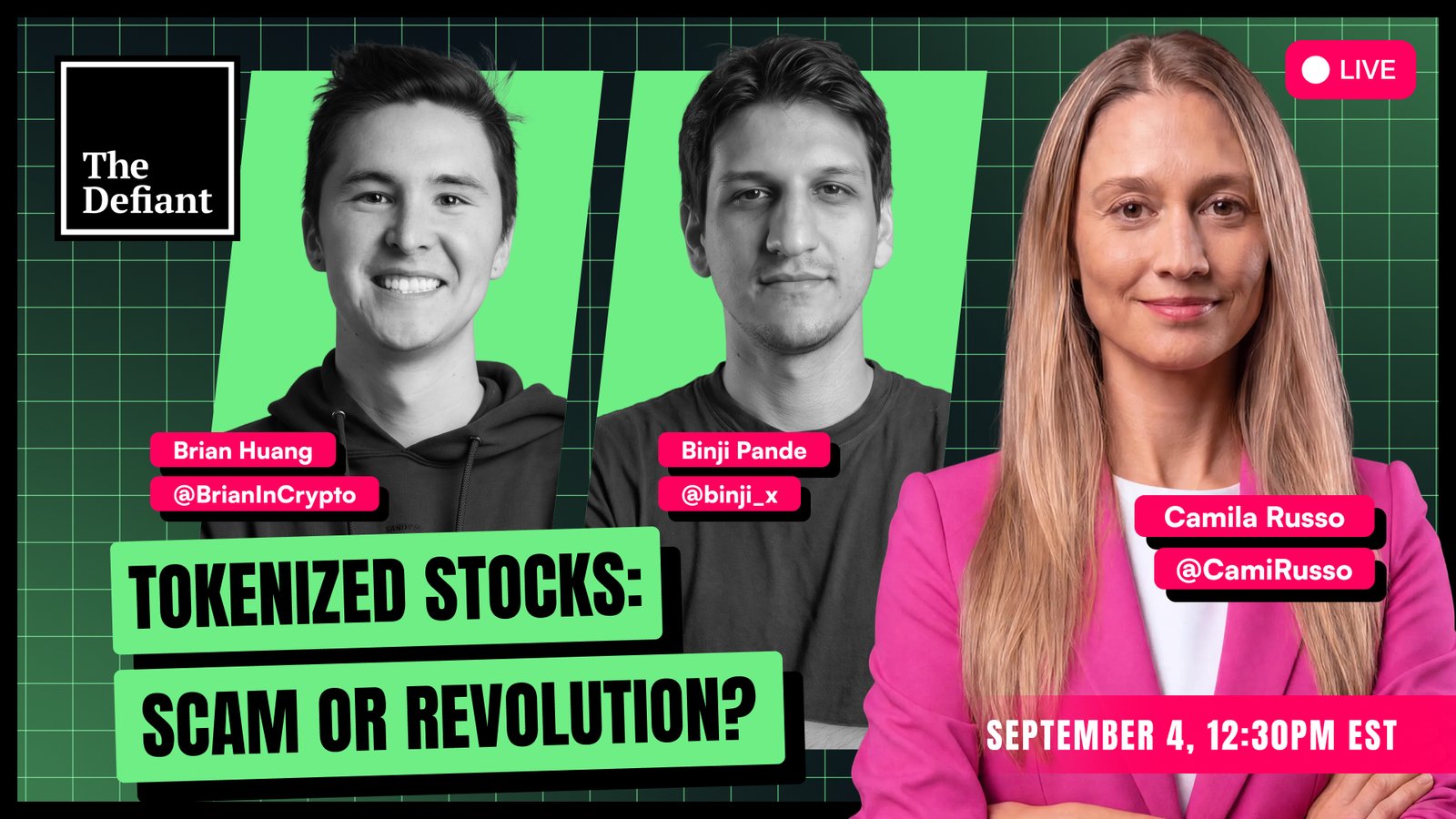
To unpack this complex topic, prominent crypto journalist Camila Russo recently hosted an in-depth discussion featuring industry experts Brian Huang and Binji. The conversation tackled the mechanics, appeal, and underlying risks of these contrasting digital asset categories, highlighting how fast-evolving market structures impact individual market participants.
Understanding Tokenized Equities: Real-World Assets on the Blockchain
Tokenized stocks represent real-world equities—such as shares of publicly traded corporations—minted as cryptographic tokens on decentralized blockchain networks. By converting traditional financial assets into blockchain-native tokens, developers aim to frictionlessly bridge legacy capital markets with decentralized finance (DeFi) infrastructure.
Advocates of tokenized equities point to several structural advantages over conventional brokerage models:
- Continuous 24/7 Market Access: Unlike traditional stock exchanges that operate within restricted business hours, blockchain-based platforms enable round-the-clock trading across global time zones.
- Fractional Ownership: Tokenization allows high-value shares to be split into tiny fractions, lowering capital requirements for individual investors who may otherwise be priced out of expensive blue-chip equities.
- Instantaneous Settlement: Smart contract automation eliminates multi-day clearing and settlement cycles (such as T+1 or T+2), reducing counterparty and liquidity risk.
- Global Accessibility: Investors in emerging markets or regions with limited access to international brokerages can theoretically participate in global equity growth through permissionless digital wallets.
Despite these promised efficiencies, tokenized traditional assets face formidable hurdles. Regulatory compliance remains a primary sticking point, as securities authorities worldwide scrutinize platforms offering synthetic or derivative exposure to regulated stocks without traditional intermediary oversight or prospectus requirements.
The Memecoin Phenomena: Viral Speculation vs. Market Reality
On the opposite end of the crypto spectrum lie memecoins—cryptocurrencies born from internet culture, viral memes, and social momentum rather than intrinsic cash flows or technological breakthroughs. While tokenized stocks aim to digitize traditional value, memecoins rely on community sentiment, speculative hype, and algorithmic viral loops.
The rapid growth of decentralized exchanges (DEXs) and automated token creation toolkits has dramatically reduced the barrier to launching new tokens. As a result, thousands of memecoins are created daily, generating intense trading volume and attracting significant speculative capital.
Proponents argue that memecoins represent a pure form of market dynamics where attention serves as currency. They view memecoins as open-access experiments in online community building, digital culture, and liquidity coordination. However, critics counter that the market for memecoins resembles an unregulated casino, characterized by extreme volatility, low liquidity, and frequent fraudulent practices such as rug pulls and coordinated pump-and-dump schemes.
Revolutionary Financial Primitives or Systematic Retail Threats?
The core tension in current crypto discussions centers on whether these emerging asset classes democratize opportunity or disproportionately harm everyday retail participants. The arguments split along structural lines:
- The Bullish Case for Financial Democratization: Supporters view both tokenized real-world assets and community tokens as essential components of an open financial ecosystem. In this view, permissionless networks remove rent-seeking intermediaries, return power to user communities, and provide global citizens with tools for wealth generation that were previously restricted to institutional players.
- The Bearish Case for Retail Exhaustion: Skeptics contend that retail investors are structurally disadvantaged when trading highly speculative or complex instruments. High-frequency trading bots, insider allocations, and asymmetrical information advantages often leave late-stage retail buyers holding depreciating assets, potentially leading to widespread financial losses and diminished trust in broader blockchain adoption.
Regulatory Responses and the Search for Market Integrity
As trading volumes for both tokenized real-world assets and speculative tokens surge, international regulatory agencies are intensifying their focus on decentralized capital markets. Securities regulators are increasingly applying existing financial laws to issuers, decentralized exchanges, and liquidity providers.
For tokenized stocks, regulators emphasize investor disclosure, anti-money laundering (AML) compliance, and proper asset backing to ensure tokens accurately reflect underlying corporate equity. Meanwhile, enforcement actions against fraudulent token creators aim to curb market manipulation and protect retail traders from malicious actors operating in permissionless ecosystems.
Industry leaders generally agree that establishing clear legal frameworks will be essential if tokenized assets are to achieve mainstream institutional adoption without driving speculative activity into opaque, unmonitored shadow markets.
Conclusion
The ongoing debate over tokenized stocks and memecoins illustrates the fundamental tension at the heart of the digital asset space: balancing permissionless innovation with consumer protection. While tokenized real-world assets hold immense long-term promise for modernizing global capital markets, and memecoins highlight the powerful mechanics of internet-driven liquidity, the risks to retail participants remain severe without adequate education, risk management, and regulatory clarity. As the crypto ecosystem matures, finding an equilibrium between accessibility and market safety will determine whether these new digital primitives build a more inclusive financial system or lead to systemic retail losses.