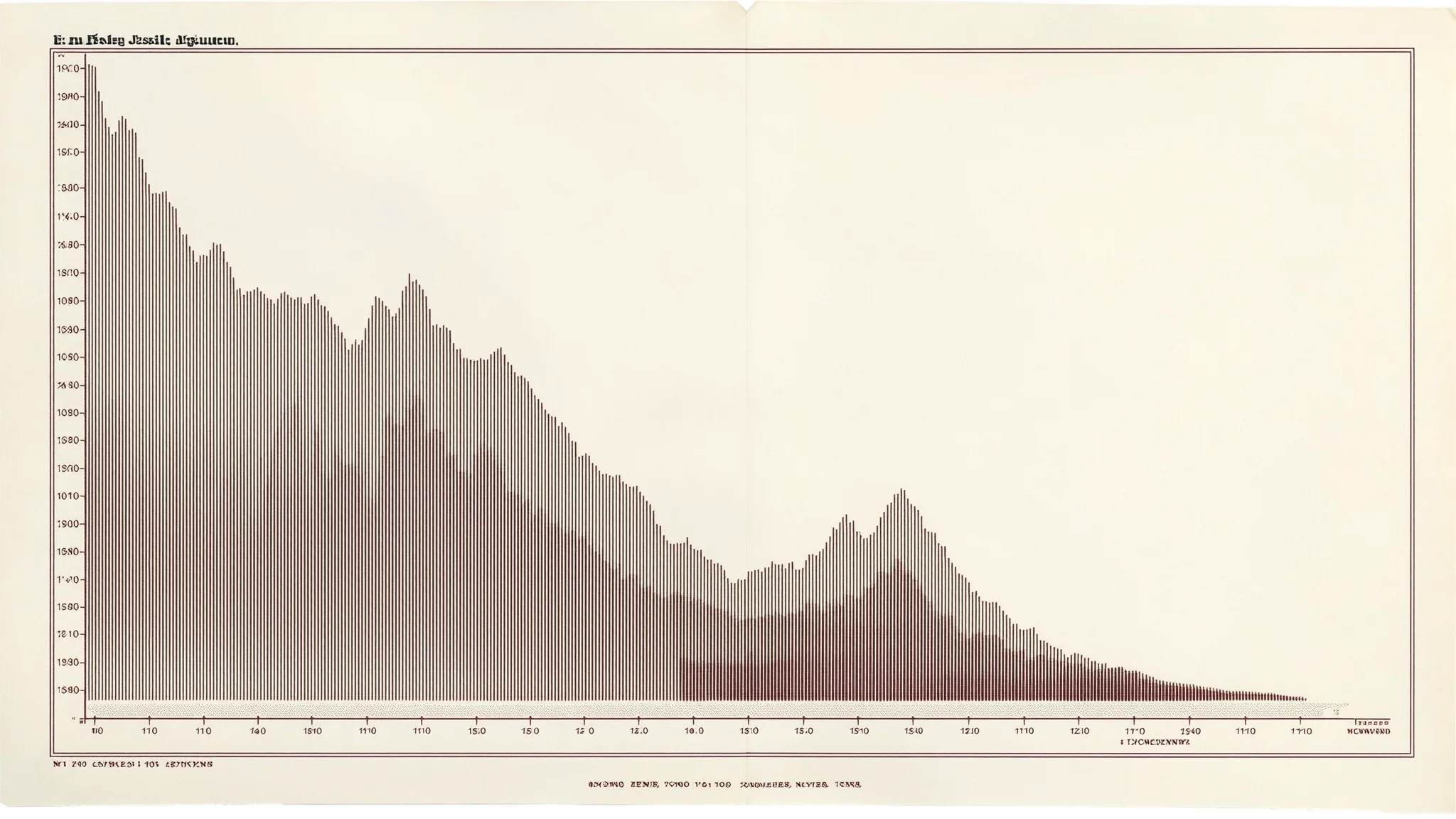
Wall Street Faces Prolonged Pressure
Global financial markets experienced severe headwinds this week as the S&P 500 index tumbled 3.7% in a single trading session, extending its losing streak to seven consecutive days. The benchmark index closed out a brutal week down 8.6%, reflecting a broad-based sell-off that crossed multiple asset classes. Investors across equities and digital assets found little refuge as macroeconomic pressures continued to weigh heavily on market sentiment.
The sharp downturn underscores growing nervousness among market participants regarding interest rate trajectories, macroeconomic stability, and corporate profitability. What initially began as a routine pullback has quickly metastasized into one of the most prolonged downturns in recent memory, leaving analysts and traders carefully assessing potential support levels.
Anatomy of the Seven-Day Market Slide
The continuous decline over seven sessions represents a notable shift in market dynamics. Equity markets had previously shown resilience, but a confluence of persistent inflation data, tight monetary policy expectations, and recalibrated corporate forward guidance triggered a swift unwind of risky positions.
Key factors contributing to the equity rout include:
- Tech Sector Vulnerability: High-growth technology stocks, which carry significant weight in the benchmark index, faced aggressive profit-taking and multiple compression as bond yields fluctuated.
- Institutional Deleveraging: Systematic funds and quantitative strategies triggered automated sell orders as volatility thresholds were breached, amplifying the downward momentum.
- Broad-Based Participation: The decline was not restricted to a single sector; cyclical industries, consumer discretionary, and financial equities all posted substantial losses throughout the week.
Trading volume surged during the latest slump, indicating that institutional investors were actively reducing risk exposure rather than engaging in routine dip-buying activities.
Cryptocurrency Correlations and Bitcoin’s Slump
The risk-off sentiment was not confined to traditional financial markets. Bitcoin and the broader cryptocurrency sector also posted steep losses over the same period, closely mirroring the downside trajectory of equity indexes.
For years, proponents of digital assets have argued that Bitcoin could function as a hedge against macroeconomic instability or traditional financial sector distress. However, during periods of acute liquidity contraction, historical data demonstrates that crypto assets tend to trade as high-beta risk assets. When institutional managers face margin calls or seek to raise liquidity quickly, liquid assets across all categories—including cryptocurrencies—are liquidated.
Bitcoin’s sharp weekly contraction highlights the interconnectedness of modern financial markets. As traditional financial institutions have increased their exposure to digital assets through spot ETFs, futures contracts, and direct balance sheet holdings, the correlation between major stock indexes and top cryptocurrencies has periodically spiked during market stress.
Macroeconomic Drivers Behind the Downturn
To understand the current market volatility, it is essential to examine the underlying economic backdrop. Central banks globally, particularly the Federal Reserve, remain vigilant in their efforts to manage inflation expectations while attempting to steer economies toward a soft landing.
Several macroeconomic variables have converged to create a challenging environment for asset pricing:
- Interest Rate Expectations: Markets have had to reprice expectations regarding the timing and magnitude of prospective interest rate cuts as economic indicators yield mixed signals.
- Geopolitical Uncertainties: Ongoing international conflicts and trade friction continue to introduce supply chain risks and energy price volatility.
- Corporate Earnings Headwinds: Margin compression and cautious executive guidance have led analysts to revise earnings estimates downward for coming quarters.
When these macro headwinds interact, they diminish investor risk appetite, leading to extended pullbacks like the seven-session slide observed in the S&P 500.
Historical Context and Investor Sentiment
While an 8.6% weekly drop in the S&P 500 is significant, market analysts emphasize that periodic corrections are a structural component of long-term market cycles. Historical data shows that seven-day losing streaks, though relatively rare during strong bull markets, often occur during periods of macroeconomic transition or repricing.
Investor sentiment indicators, such as the Cboe Volatility Index (VIX), spiked significantly during the week, reaching levels reflective of heightened market anxiety. Capital flows indicated a migration toward traditional safe-haven assets, such as short-term government treasuries and the US dollar, as market participants prioritized capital preservation over growth.
Looking Ahead: What to Watch in the Coming Weeks
As market participants digest the week’s losses, attention now shifts to upcoming economic catalysts that could either stem the sell-off or trigger further downside.
Key developments to monitor include:
- Economic Data Releases: Incoming readings on consumer price indexes, employment metrics, and consumer confidence will be critical in shaping expectations for upcoming central bank rate decisions.
- Central Bank Communications: Speeches and policy announcements from Federal Reserve officials will be scrutinized for hints regarding monetary policy direction.
- Technical Support Levels: Technical analysts will closely track whether key moving averages and historical support zones hold for the S&P 500 and major digital assets like Bitcoin.
Conclusion
The S&P 500’s 3.7% drop and its cumulative 8.6% weekly loss highlight a period of heightened uncertainty and risk recalibration across global financial markets. Coupled with Bitcoin’s parallel decline, the synchronized drawdown serves as a potent reminder of how macroeconomic pressures impact both traditional equities and digital assets. While market volatility presents short-term challenges, investor focus will remain firmly fixed on incoming economic data and monetary policy guidance to determine the market’s trajectory in the weeks ahead.
