Expanding Access to Event-Based Financial Data
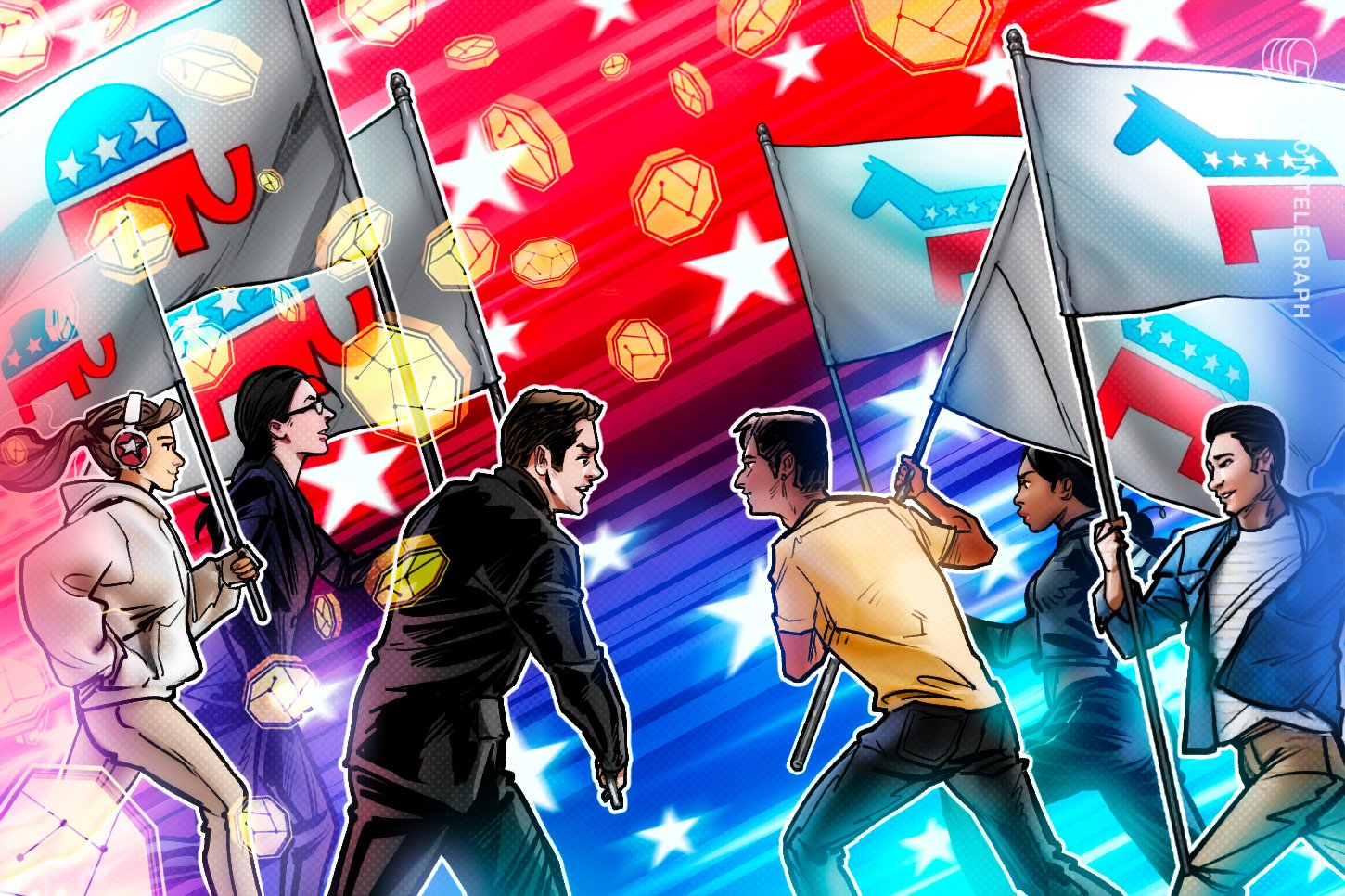
As institutional financial markets increasingly incorporate real-time sentiment metrics and probabilistic modeling into their automated trading strategies, infrastructure provider DoubleZero has announced the integration of political event data from Kalshi. The expansion equips institutional market participants, quantitative funds, and automated trading desks with direct, low-latency access to political prediction market metrics ahead of the upcoming United States midterm elections.
By incorporating Kalshi’s event contract feeds into its high-performance data distribution network, DoubleZero is addressing a sharp rise in institutional demand for alternative data streams. The integration enables sophisticated market participants to monitor rapid shifts in political sentiment with sub-second accuracy, facilitating tighter alignment between macroeconomic portfolio positioning and real-time election probabilities.
Traditionally, political risk has been difficult for quantitative desks to price dynamically. By converting political outcomes into standardized financial feeds, the partnership provides automated systems with structured datasets that can be ingested directly into risk management engines and execution algorithms.
The Rise of Prediction Markets in Political Forecasting
Prediction markets have rapidly evolved from specialized speculative outlets into recognized benchmarks for political forecasting. Unlike conventional public opinion polls, which depend on sampling techniques and periodic updates, event contracts aggregate the financial expectations of market participants within a continuous price discovery mechanism.
Several core factors drive the growing adoption of political event markets among professional market operators:
- Continuous Price Discovery: Contract prices update dynamically as economic reports, campaign events, and breaking news unfold, providing an immediate snapshot of market consensus.
- Financial Incentive Structure: Capital allocators face direct financial consequences for inaccurate pricing, creating incentives to process incoming information with precision.
- Quantitative Standardisation: Probabilities derived from market-clearing contract prices can be seamlessly mapped into quantitative trading algorithms and multi-asset risk frameworks.
As a venue regulated by the U.S. Commodity Futures Trading Commission (CFTC), Kalshi has established itself as a primary regulated marketplace for political event trading in the United States. The exchange offers binary options based on discrete political outcomes, ranging from legislative control of Congress to specific regulatory and legislative votes.
Technical Integration and Institutional Trading Strategies
For high-frequency trading entities and systematic hedge funds, latency and data integrity are fundamental. DoubleZero’s data pipeline provides reliable delivery of order book dynamics and price changes, allowing trading firms to correlate political market signals alongside conventional asset classes like foreign exchange, equities, and sovereign debt.
Institutional traders utilize election contract data across a variety of sophisticated financial strategies:
- Macro Sector Hedging: Investment managers hedge against anticipated policy shifts—including corporate tax modifications, trade tariffs, or sector-specific regulations—by establishing offsetting positions in political contract markets.
- Cross-Asset Volatility Arbitrage: Quantitative models identify short-term mispricings between election odds and implied volatility across equity sectors, interest rate futures, or commodities.
- Tail-Risk Management: Corporate treasuries and institutional funds leverage political event contracts to shield portfolios against sudden systemic shocks stemming from contested elections or unexpected legislative gridlock.
Regulatory Scrutiny and Market Evolution
The integration of political market data into institutional infrastructure occurs amid a transforming regulatory landscape in North America. U.S. regulators have historically scrutinized financial products linked to political outcomes, citing concerns surrounding market integrity, public policy implications, and federal oversight boundaries.
However, recent legal clarifications and judicial rulings have clarified the legal framework for domestic exchanges operating regulated event markets. As legal uncertainties dissipate, institutional service providers are building out robust data pipelines to service mainstream financial institutions seeking exposure to these emerging asset classes.
Market analysts note that trading volume across political contracts has reached record levels in recent electoral cycles. As liquidity deepens and bid-ask spreads tighten, the predictive accuracy of these financial venues is expected to increase, further solidifying their role alongside traditional macroeconomic indicators.
Looking Ahead: The Intersection of Finance and Political Insights
DoubleZero’s addition of Kalshi election market data illustrates a growing convergence between political analysis and systematic trading. By treating political outcomes as quantifiable financial inputs, institutional trading desks are fundamentally changing how political risk is priced, monitored, and managed across global markets.
As the U.S. midterms approach, real-time political odds are poised to become a core input in institutional risk models. The collaboration between DoubleZero and Kalshi confirms that political prediction markets have transitioned from novel indicators into essential tools for the modern financial ecosystem.