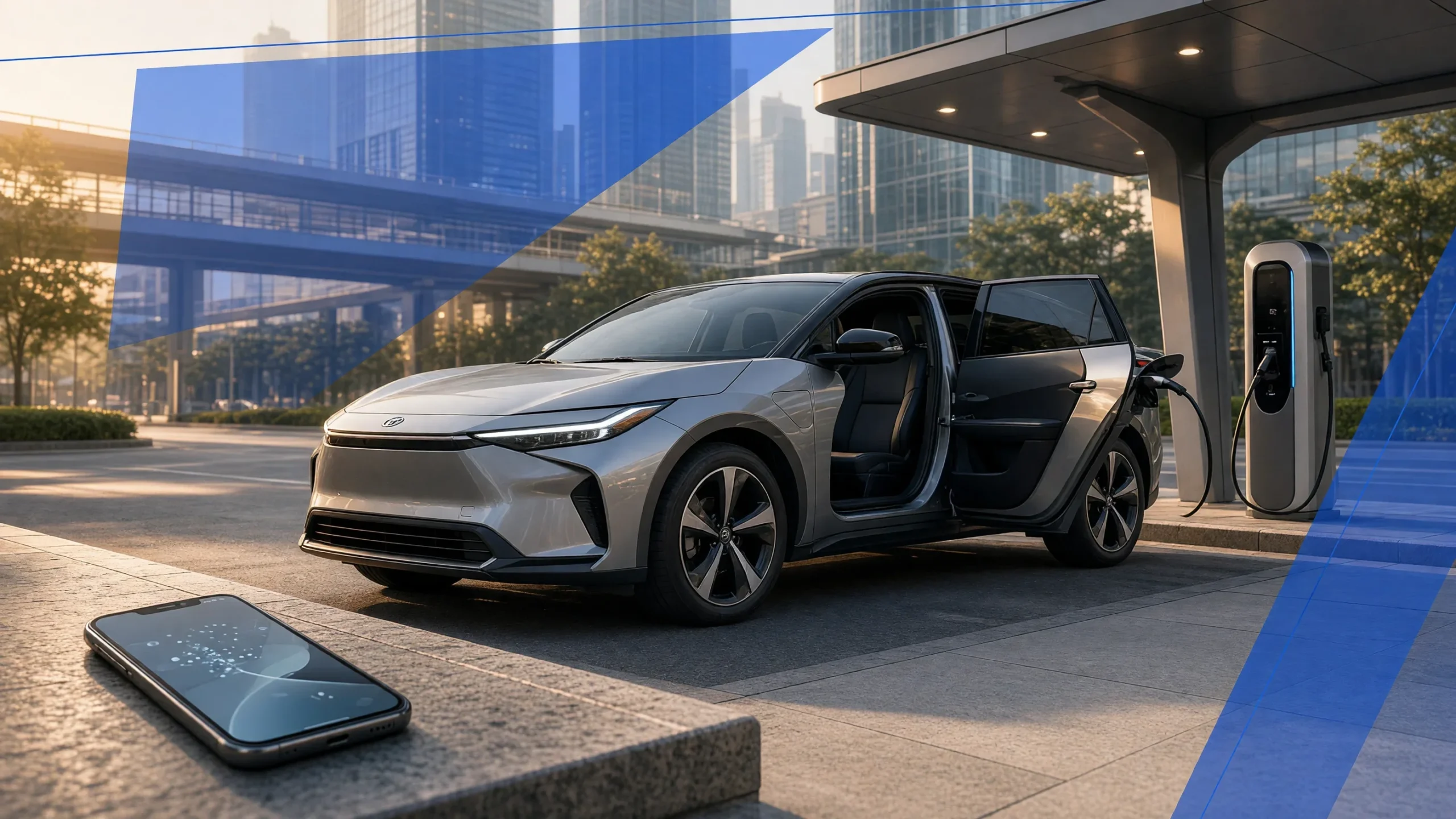
Autonomous vehicle technology enterprise Pony.ai has officially integrated the Toyota bZ4X electric crossover into its fully driverless commercial robotaxi fleet operating in Guangzhou, China. The newly deployed vehicles offer round-the-clock passenger transport without a human safety driver behind the wheel, representing a significant milestone in the ongoing partnership between the autonomous driving software provider and the world’s largest automaker by vehicle sales.
The deployment in Guangzhou marks a concrete step forward in the strategic joint venture between Pony.ai and Toyota Motor Corporation. The two companies, alongside local manufacturing partners, are targeting a broader rollout of approximately 1,000 fully autonomous bZ4X vehicles across major tier-one urban centers in China over the coming years.
A Synergistic Partnership Accelerated by Custom Hardware Integration
The relationship between Pony.ai and Toyota has evolved continuously since their initial collaborative efforts were announced in 2019. Over the past several years, Toyota has injected hundreds of millions of dollars into Pony.ai to support the research, development, and mass-production integration of Level 4 autonomous driving systems. Level 4 autonomy signifies that a vehicle can handle all driving tasks under specific operational conditions without requiring human intervention.
The integration of the all-electric Toyota bZ4X SUV platform represents a key shift toward commercial readiness. Unlike early-stage prototype vehicles that relied on aftermarket modifications and retrofitted sensors, the autonomous bZ4X platform features custom vehicle design tweaks tailored specifically for driverless ride-hailing services. Key hardware features include:
- Redundant Power and Steering Systems: Built-in dual backups for critical vehicle controls, including steer-by-wire systems and dual braking circuits, ensuring vehicle safety in the event of primary system failure.
- Integrated Sensor Suites: A unified sensor pod mounted on the vehicle roof housing high-resolution LiDAR units, millimeter-wave radars, and multi-angle camera systems to provide a 360-degree real-time view of surrounding environments.
- All-Weather Perception Software: Advanced deep learning algorithms calibrated specifically to parse complex urban scenarios, heavy precipitation, low-light night conditions, and intricate street layouts typical of dense metropolitan areas.
Expanding Operational Hours: The Shift to 24/7 Driverless Fleet Access
One of the most notable aspects of the recent Guangzhou deployment is the transition to round-the-clock service. Operating autonomous ride-hailing services 24 hours a day, seven days a week presents distinct technical challenges compared to daytime-only operations. Nighttime driving requires superior sensor sensitivity and sensor-fusion algorithms capable of interpreting variable lighting conditions, glaring headlights, and unexpected pedestrian movements in dimly lit environments.
Passengers within designated operational zones in Guangzhou can request rides via the PonyPilot+ mobile application at any hour. By removing the safety driver entirely and offering 24/7 service availability, Pony.ai aims to demonstrate both the operational stability of its software and the economic viability of autonomous ride-hailing networks compared to traditional driver-based rideshare business models.
Guangzhou as a Global Hub for Autonomous Mobility
Guangzhou, the capital of Guangdong Province, has established itself as one of the most progressive testing grounds for autonomous mobility worldwide. Local municipal authorities have implemented forward-looking regulatory frameworks that permit qualified technology firms to test and commercialize driverless vehicles across extensive urban and suburban districts, such as Nansha.
Pony.ai, which maintains major operational headquarters in Guangzhou and Silicon Valley, has systematically expanded its operational footprint within the city. The addition of the bZ4X fleet builds upon millions of cumulative testing and operational miles logged across complex urban traffic conditions, highway networks, and heavy traffic corridors.
The Broader Competitive Landscape in Autonomous Transportation
The expansion of Pony.ai’s vehicle lineup occurs amid intense global competition in the autonomous vehicle sector. Within China, tech giants and specialized startups are racing to scale commercial robotaxi fleets:
- Baidu Apollo: Operates extensive Apollo Go driverless services across dozens of Chinese cities, aggressively scaling its custom sixth-generation driverless vehicles.
- WeRide: Continues to expand its multi-vehicle autonomous platform, encompassing robotaxis, mini-buses, and automated street sweepers across domestic and international markets.
- AutoX: Maintains large-scale fully driverless test zones targeting dense urban centers with high-capacity sensor platforms.
On the international stage, North American competitors such as Alphabet’s Waymo continue to broaden commercial operations in cities like San Francisco, Phoenix, and Los Angeles, while automakers worldwide reevaluate their software strategies to compete with emerging driverless platforms.
Future Outlook: Path Toward Large-Scale Commercialization
As Pony.ai and Toyota continue pushing toward their goal of 1,000 autonomous bZ4X vehicles across China, industry observers are closely watching key metrics related to cost efficiency and vehicle scalability. Achieving profitable unit economics remains the ultimate hurdle for the robotaxi industry, requiring a delicate balance between reducing expensive hardware costs—such as LiDAR and computing units—and maximizing vehicle utilization rates.
By leveraging Toyota’s high-volume manufacturing capabilities and robust electric vehicle platforms alongside Pony.ai’s specialized autonomous software suite, both companies are positioning themselves to capitalize on the expected rapid expansion of fully autonomous transport networks over the next decade.
