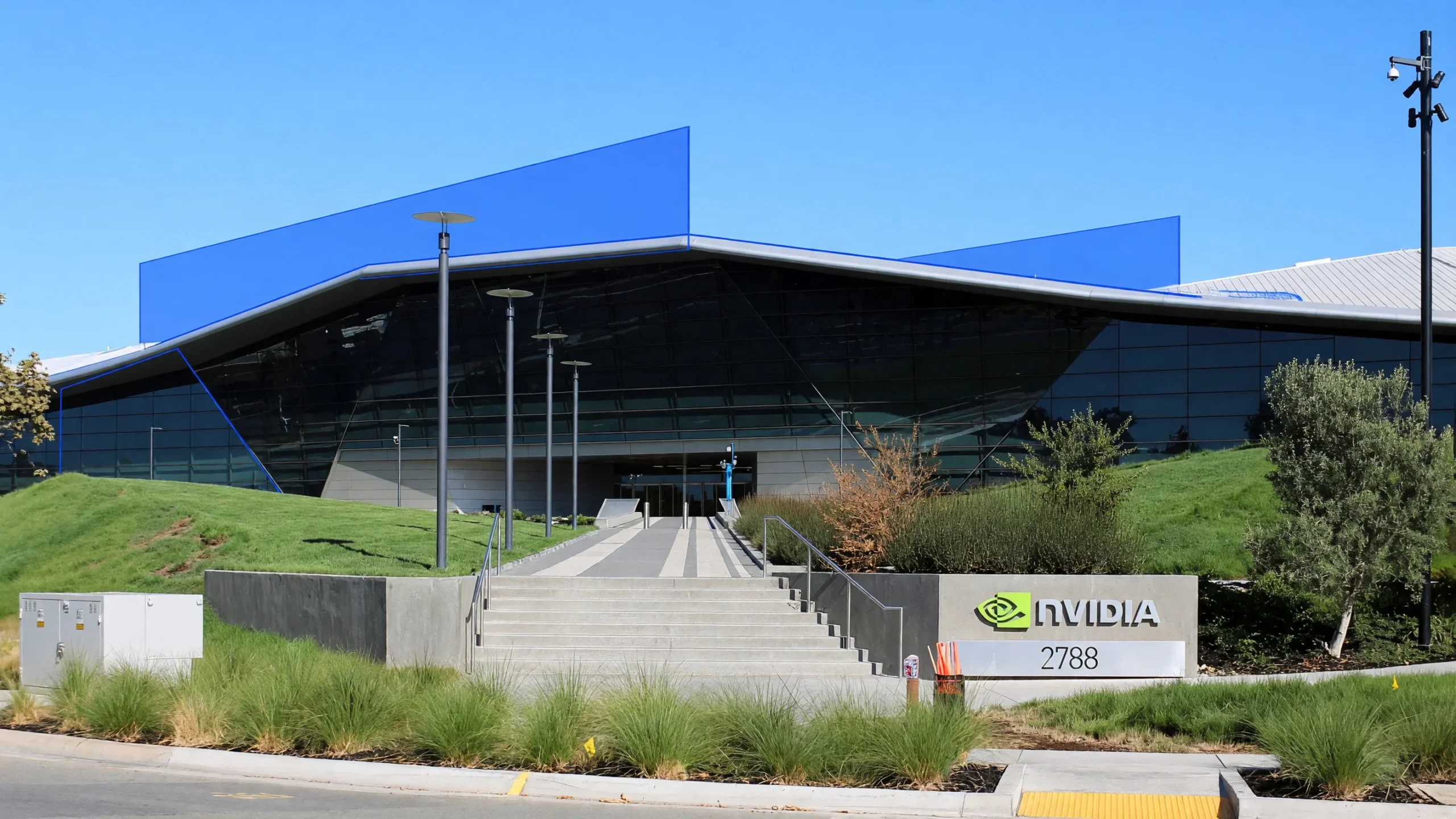
Record Data Center Performance Anchors Financial Surge
Semiconductor giant Nvidia has once again delivered financial results that surpassed Wall Street expectations, bolstered by relentless demand for high-performance computing hardware dedicated to artificial intelligence applications. The company reported that its data center business segment achieved a staggering $107.6 billion in revenue, reinforcing its dominant position as the primary infrastructure provider for the ongoing global AI expansion.
Following the disclosure of these results, Nvidia’s shares climbed approximately 4% during after-hours trading. Investors responded positively to the robust top-line performance, which demonstrated that enterprise appetite for specialized graphics processing units remains powerful across cloud service providers, sovereign AI initiatives, and multinational technology corporations.
Navigating Export Restrictions and China Guidance
Despite the stellar performance across core international markets, Nvidia’s forward-looking guidance presented a nuanced picture regarding its presence in East Asia. The company’s fourth-quarter outlook intentionally excludes revenue projections from China data-center compute sales, reflecting persistent geopolitical friction and stringent export controls imposed by federal regulators.
For several quarters, Washington has tightened restrictions on advanced microchip exports to restrict access to cutting-edge technology. In response, Nvidia has had to adjust its product portfolio for the region, navigating complex compliance protocols and localized competition.
- Strategic Pivot: By removing China compute sales from forward projections, Nvidia aims to set a conservative baseline that insulates corporate guidance from sudden regulatory policy shifts.
- Global Demand Compensation: Surging procurement from North American, European, and Asian markets outside China continues to absorb production capacity, mitigating potential revenue drops from restricted territories.
- Customized Hardware: The company continues to evaluate compliant, region-specific hardware architectures to maintain a footprint in non-restricted market segments where permissible.
Leadership Shift and Executive Continuity
The financial report comes at a crucial juncture for Nvidia, coinciding with significant leadership developments, including announcements surrounding the transition of longtime Chief Executive Officer Jensen Huang. Under Huang’s multi-decade stewardship, Nvidia transformed from a specialized gaming hardware manufacturer into the world’s most valuable semiconductor enterprise and the undisputed engine of the generative AI boom.
Market analysts have closely monitored how executive transitions might impact the strategic direction of the company. However, the latest financial results suggest that Nvidia’s operational engine remains firmly intact, supported by deep enterprise integration and long-term customer commitments.
Industry observers note that the company’s long-term product roadmap—encompassing next-generation chip architectures, advanced networking fabrics, and unified software platforms—remains structurally insulated from short-term executive shifts.
Enterprise AI Ecosystem and Supply Chain Realities
The massive $107.6 billion data-center milestone highlights the shifting spending priorities among major technology enterprises. Hyperscale cloud providers continue to allocate unprecedented capital expenditure toward building out sovereign and corporate AI infrastructure.
- High-Density Compute Clusters: Enterprise customers are increasingly ordering complete server systems rather than standalone graphics cards, driving higher average selling prices.
- Software Monetization: Nvidia’s proprietary CUDA ecosystem and enterprise AI software stacks create strong customer lock-in, making transitions to rival hardware platforms costly for developers.
- Packaging and Fab Capacity: Advanced packaging constraints remain a critical focal point, though manufacturing partners have progressively expanded capacity to meet persistent demand.
Strategic Outlook and Market Sentiment
Wall Street’s immediate reaction to the earnings release reflects renewed optimism regarding the longevity of the AI infrastructure investment cycle. While early skepticism questioned whether hyper-scaler capital expenditures would translate into sustained chip sales, Nvidia’s financial performance demonstrates that enterprise spending remains resilient.
Going forward, the market will closely monitor the ramp-up of Nvidia’s newest hardware platforms, including the rollout of its next-generation chip architectures. Analysts anticipate that customer transition to newer architectures will sustain revenue momentum even as trade policies evolve.
Conclusion
Nvidia’s ability to eclipse financial forecasts amidst executive shifts and trade restrictions underscores the structural tailwinds powering the artificial intelligence ecosystem. With data-center operations generating $107.6 billion and international demand absorbing supply, the company maintains a commanding leadership position in global computing infrastructure. As Nvidia navigates regulatory headwinds and leadership transitions, its solid operational foundation and technological moat position it to shape the future of enterprise technology for years to come.
