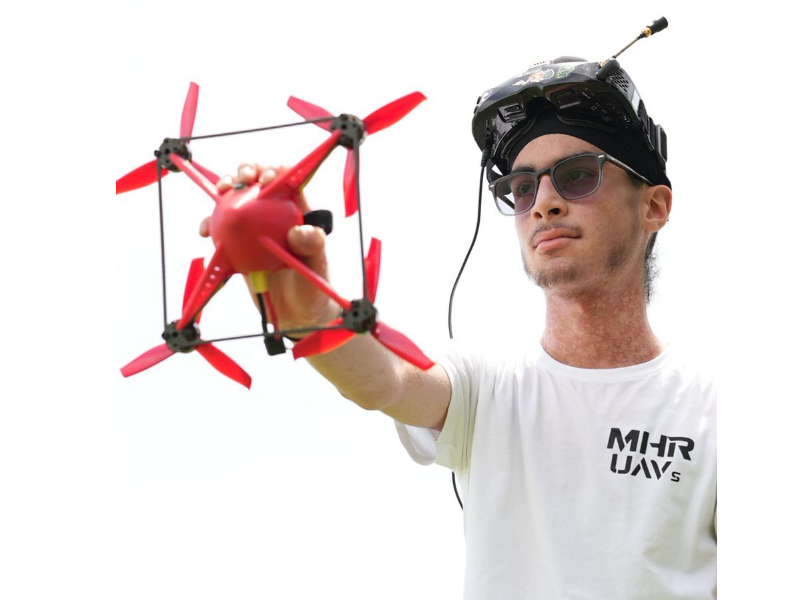
Teenage Engineer Redefines Drone Performance Standards
In a remarkable demonstration of engineering ingenuity and high-speed robotics, young innovator Mehar Singh has officially etched his name into the Guinness World Records. Singh successfully built and piloted a custom high-performance drone designed to accomplish the fastest vertical ascent ever recorded by an unmanned aerial vehicle (UAV). The milestone highlights both his exceptional individual technical skill and the ongoing rapid evolution of custom aerial robotics.
The record-setting achievement took place during a rigorously monitored flight trial. Official adjudicators and technical experts utilized specialized telemetry equipment, radar measurement devices, and high-speed optical cameras to verify the craft’s ascent velocity and climb rate. Singh’s custom quadcopter far surpassed previous speed thresholds, reaching designated altitudes in mere fractions of a second. The historic flight has drawn praise from aerospace engineers, robotics researchers, and drone enthusiasts across the globe.
The Engineering Behind Extreme Acceleration
Achieving extreme vertical speed with a multirotor aircraft presents formidable aerodynamic and physical challenges. Unlike conventional fixed-wing aircraft that generate lift through forward motion across wings, a quadcopter relies exclusively on the vertical thrust produced by its spinning propellers. To propel a multirotor straight upward at world-record velocity, every single mechanical and electronic component must be engineered for extreme power-to-weight efficiency and structural resilience.
To overcome these engineering obstacles, Singh implemented several advanced design strategies:
- Extreme Thrust-to-Weight Ratio: By equipping the drone with high-KV brushless motors powered by ultra-high-discharge Lithium Polymer (LiPo) batteries, the vehicle generated an upward thrust force several times greater than its total takeoff mass.
- Lightweight Composite Airframe: Custom carbon-fiber structural framing was engineered to maintain exceptional rigidity while minimizing overall mass, preventing structural flex or failure under sudden G-force acceleration.
- Optimized Propeller Dynamics: Selecting custom propeller pitch and blade geometry allowed for maximum air displacement at tens of thousands of revolutions per minute while mitigating aerodynamic stall.
- High-Current Electronic Speed Controllers (ESCs): Custom-tuned ESCs were integrated to route massive electrical currents from the power supply to the motors instantaneously without overheating or causing signal desynchronization.
Navigating Complex Flight Dynamics and Thermal Constraints
Building an ultra-fast vertical ascent drone is not simply a matter of increasing motor output. At high acceleration rates, electronic circuits generate intense resistive heat, battery voltage drops dramatically under high electrical loads, and aerodynamic drag increases quadratically relative to velocity. Overcoming these technical barriers required extensive mathematical modeling, computer simulations, and rigorous field testing.
Flight stability during rapid vertical acceleration presents another substantial engineering hurdle. As the aircraft shoots directly upward at high velocity, atmospheric turbulence and localized propeller wash can easily destabilize the craft, leading to erratic flight paths or sudden crashes. Singh addressed this by precisely tuning custom flight controller firmware. By refining Proportional-Integral-Derivative (PID) control algorithms and sensor filtering, the drone’s flight controller made thousands of micro-adjustments per second to maintain a flawless vertical trajectory.
Broader Applications for High-Performance UAV Technology
While record-breaking drone flights often generate headlines within the realms of extreme sports and technological showcases, the underlying research and development carry profound implications for the commercial and industrial UAV sectors. Innovations pioneered by independent builders like Singh routinely inform next-generation commercial drone architecture.
Key sectors that benefit from breakthroughs in high-speed and rapid-ascent UAV technology include:
- Emergency Search and Rapid Response: Ultra-fast ascending drones can rapidly deploy to high elevation to establish emergency communication relays, deliver critical supplies, or assess natural disaster damage.
- Atmospheric and Meteorological Monitoring: Rapid-climbing multirotors provide meteorologists with the ability to take vertical atmospheric samples—measuring temperature, humidity, and air quality across atmospheric columns before weather systems shift.
- Industrial and Infrastructure Inspection: High-acceleration drones enable quicker vertical coverage when inspecting tall structures, wind turbines, power line towers, and industrial smokestacks.
The Surge of Youth Innovation in Autonomous Systems
Mehar Singh’s recognition by Guinness World Records highlights a burgeoning international trend: young creators taking advantage of open-source software, accessible hardware, and advanced digital fabrication tools to achieve world-class technological breakthroughs. Educational initiatives focused on Science, Technology, Engineering, and Mathematics (STEM), combined with competitive drone sports, have created an ideal environment for young engineers to excel.
Singh’s success shows how individual passion, when paired with modern tools such as 3D printing, computer-aided design (CAD), and custom electronics design, allows young innovators to solve complex physical problems once reserved for well-funded aerospace laboratories.
Conclusion
Mehar Singh’s record-shattering drone flight marks a major breakthrough in multirotor design and performance. By pushing the boundaries of electronic power delivery, thrust efficiency, and atmospheric stability, Singh has set a bold new baseline for UAV capabilities. As unmanned aircraft continue to play an increasingly vital role in transport, emergency response, and scientific research, achievements like this serve as a powerful reminder of how youth-driven innovation is shaping the future of aviation technology.