A Pivotal Shift in Microsoft’s Mobile Hardware Strategy
Microsoft’s journey in the mobile hardware space has been characterized by bold experiments, strategic pivots, and persistent innovation. After officially winding down its dual-screen Surface Duo lineup, the tech giant appears to be far from finished with mobile form factors. A recently disclosed patent filing reveals that Microsoft is actively researching a next-generation foldable device engineered to address some of the most persistent design flaws in current flexible smartphones.
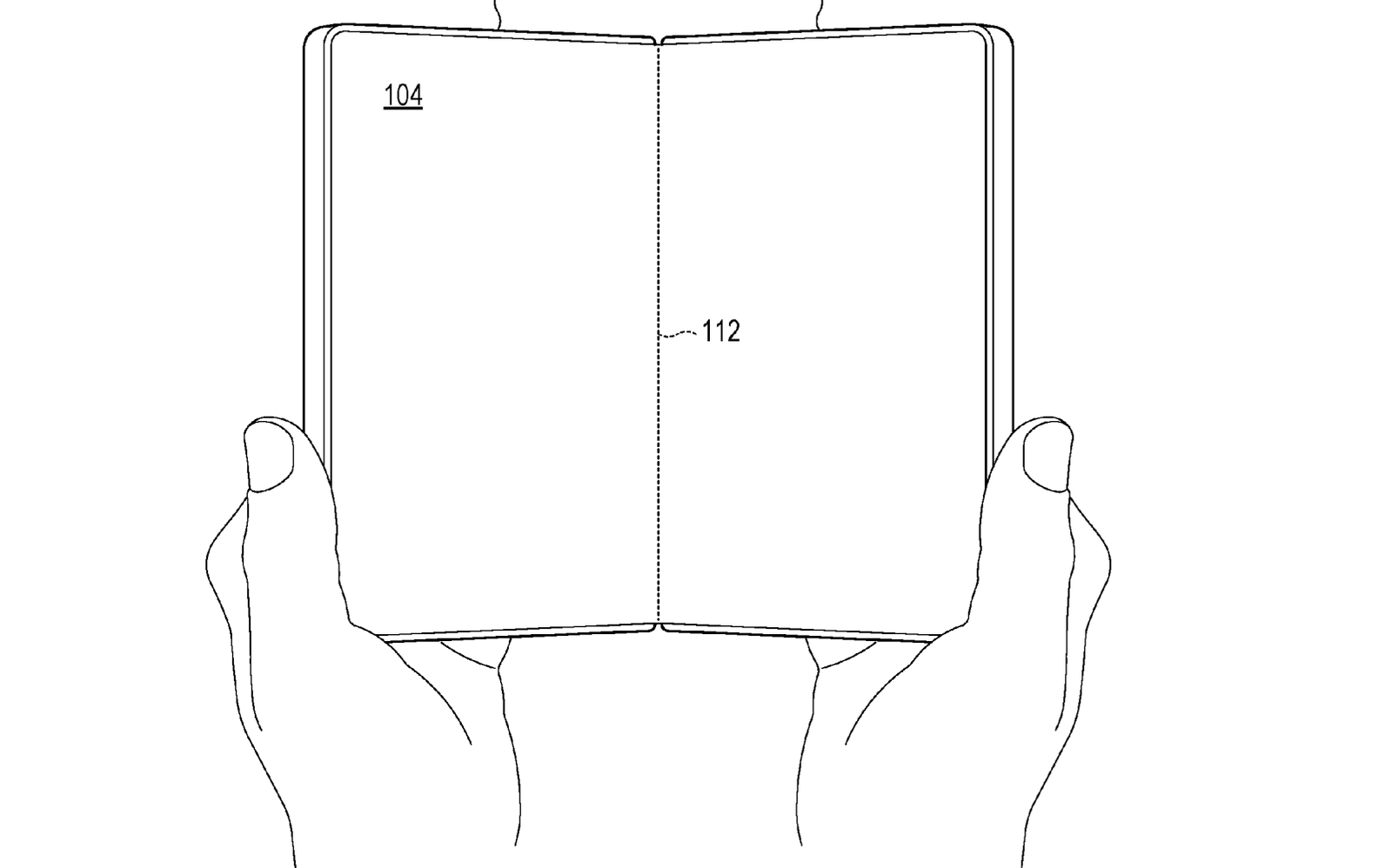
The patent outlines an advanced folding mechanism built around a specialized single-hinge system referred to as a spine cover plate. Rather than relying on two distinct glass panels separated by a prominent physical seam—as seen in the original Surface Duo—this new concept focuses on supporting a single, continuous flexible display. By targeting the traditional pain points of foldable technology, Microsoft aims to position itself once again as a key innovator in the premium mobile landscape.
Understanding the New Patent: The Spine Cover Plate
The core innovation highlighted in Microsoft’s patent documentation revolves around the dynamic mechanical assembly known as the spine cover plate. In conventional foldable devices, the hinge area often creates a visible crease across the flexible screen, creates thickness challenges when folded flat, and creates vulnerable entry points for dust and foreign debris. Microsoft’s proposed design seeks to solve these technical limitations through a multi-layered support framework.
Key engineering objectives detailed in the patent include:
- Crease Reduction: Utilizing an adjustable support plate that supports the flexible screen during bending, minimizing structural tension and visible indentation.
- Profile Thinning: Designing a hinge structure that enables a tighter bend radius without increasing the overall thickness of the chassis when closed.
- Enhanced Durability: Incorporating protective housing elements that shield internal components from environmental stress and mechanical wear over extended usage cycles.
- Seamless Alignment: Ensuring structural stability across both folded and fully open orientations to provide a rigid, tablet-like user experience.
Evolution from Dual Screens to a True Flexible Display
When Microsoft originally introduced the Surface Duo in 2020, it deliberately eschewed flexible OLED panels in favor of two separate ultra-thin glass displays connected by a 360-degree hinge. The philosophy behind the Duo was grounded in multi-tasking productivity, allowing users to run two applications side-by-side without the durability issues associated with early flexible screens. However, the dual-screen form factor faced criticism for its middle bezel gap, which hindered full-screen media consumption and immersion.
Transitioning toward a single flexible panel indicates that Microsoft is now confident in advancements within flexible screen materials and mechanical engineering. By shifting away from the rigid dual-screen philosophy, Microsoft is bringing its design language closer to established market standards while attempting to leapfrog current market offerings through superior hinge construction.
Overcoming Engineering Hurdles in the Foldable Segment
The commercial foldable market has grown rapidly, driven primarily by Samsung’s Galaxy Z series, Google’s Pixel Fold, and strong offerings from Chinese manufacturers such as OnePlus and Motorola. Despite this growth, consumer adoption is occasionally hindered by concerns over display longevity, hinge wear, and device bulkiness.
Creases along the bending axis remain one of the primary hardware complaints among current foldable owners. Over time, repeated stress on the flexible panel can exacerbate this crease and lead to display degradation. Microsoft’s spine cover plate system represents a mechanical intervention designed to distribute pressure evenly across the bending zone. If successfully commercialized, this approach could set a new benchmark for structural integrity in flexible displays.
The Competitive Landscape: Facing Apple and Android Giants
Microsoft’s exploration of foldable technology comes at a strategic juncture in the global mobile market. Apple has yet to launch a foldable iPhone, focusing instead on optimizing its traditional slab form factor while refining its spatial computing ecosystem. Meanwhile, Android manufacturers continue to iterate aggressively on flexible hardware, making significant strides in reducing device weight and expanding software capabilities for multi-window workflows.
For Microsoft, introducing a compelling hardware entry would not merely serve as a showcase for its industrial design capabilities, but also as a dedicated platform for its expanding suite of artificial intelligence tools, cloud services, and enterprise productivity software. A hardware flagship optimized for mobile AI interactions could allow Microsoft to carve out a distinct identity in a market currently dominated by Android and iOS ecosystems.
Looking Ahead: Patent vs. Commercial Reality
While the patent filing offers an intriguing glimpse into Microsoft’s research and development labs, it is important to maintain perspective. Major technology corporations regularly file patents to protect intellectual property and explore design concepts that may never reach mass production. Translating complex hinge physics into a reliable, cost-effective consumer product presents substantial manufacturing and supply chain challenges.
Nevertheless, the patent confirms that Microsoft maintains a active interest in mobile device architecture. Whether this spine cover plate design materializes as a commercial Surface device or serves as foundational IP for future hardware partnerships, Microsoft’s ongoing exploration demonstrates that the race to perfect the foldable smartphone is far from over.