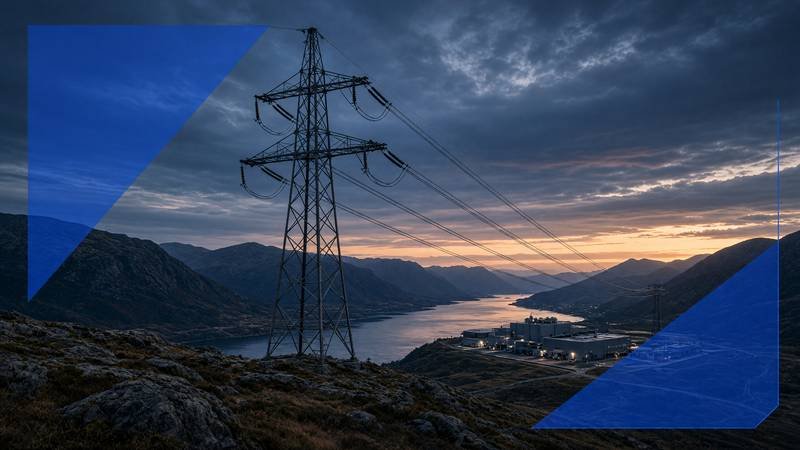
Norway Halts New Electricity Grid Reservations for Data Centers
Norway has announced a pause on new power grid capacity reservations for data center facilities, marking a significant policy shift in how the Nordic nation manages its critical energy infrastructure. The decision comes amid escalating pressure on the national electricity grid, driven by rapid industrial electrification, artificial intelligence workloads, and a surge in energy-intensive commercial projects.
According to regional reporting, existing data center power connections will remain intact and operational. However, project developers holding existing grid capacity reservations are not entirely immune to regulatory hurdles. Authorities clarified that holding reserved power capacity alone will not shield upcoming facilities from a separate, ongoing freeze on technical approvals, effectively stalling a wider pipeline of planned digital infrastructure across the country.
Understanding the Grid Reservation and Approval Freeze
To fully grasp the scope of Norway’s recent policy directive, it is essential to distinguish between grid capacity reservation and technical installation approvals. In grid management, capacity reservation guarantees that a specific volume of megawatt capacity will be made available to a prospective facility once construction completes. Technical approvals, conversely, involve the physical engineering, safety compliance, and operational sign-offs required to connect that facility to the local distribution network.
Under the new measures, the pause impacts multiple stages of data center development:
- New Capacity Requests: No new reservations for electricity grid capacity will be issued to prospective data center developers until further notice.
- Existing Connections: Facilities that are already fully operational and connected to the grid will experience no interruptions or loss of supply.
- Reserved Capacity Projects: Projects that previously secured capacity reservations but have not yet completed physical installation face a freeze on necessary technical approvals.
This dual-tiered restriction creates substantial operational uncertainty for developers who had assumed that securing a grid reservation would guarantee an eventual path to full commercial operation.
Why Norway Became a Premier Data Center Hub
For over a decade, Norway has stood out as one of Europe’s most attractive destinations for energy-intensive digital infrastructure. The country’s geography and infrastructure provided a unique set of competitive advantages that drew major hyperscale cloud providers, artificial intelligence labs, and cryptocurrency mining operators alike.
Key factors that previously accelerated Norway’s data center expansion include:
- Abundant Renewable Energy: Norway relies almost entirely on clean, low-cost hydroelectric power, allowing data center operators to fulfill strict corporate sustainability targets.
- Naturally Cold Climate: Cooler ambient temperatures reduce the reliance on energy-intensive mechanical chillers, drastically improving power usage effectiveness metrics.
- Robust Fiber Networks: High-speed subsea and terrestrial fiber optic links connect Norway seamlessly to continental Europe, the United Kingdom, and North America.
- Competitive Electricity Pricing: Historically low wholesale electricity prices positioned Norway as a cost-effective alternative to traditional European data center hubs like Frankfurt, London, Amsterdam, and Paris.
Grid Bottlenecks and Competing Industrial Priorities
Despite its vast renewable resources, Norway’s power system is increasingly facing geographic and structural grid constraints. The rapid push to decarbonize heavy transport, offshore petroleum platforms, and maritime shipping has dramatically increased overall domestic electricity demand. Concurrently, new green industries—such as battery cell manufacturing, hydrogen production, and low-carbon green steel—are competing fiercely for the same grid capacity.
Policymakers and community leaders have increasingly questioned the economic return on high-voltage power allocations. While data centers require substantial electrical power continuously, automated facilities often generate relatively modest long-term local employment compared to manufacturing plants or heavy industrial processes. Consequently, Norwegian authorities are taking a more cautious stance, auditing how limited grid capacity should be prioritized to maximize national economic resilience and decarbonization goals.
A Broader European Trend Toward Strict Data Center Regulation
Norway’s regulatory pause is not an isolated incident. Across Europe, energy regulators and municipal authorities are grappling with the soaring electricity consumption associated with cloud computing and the exponential expansion of generative AI models.
Similar policy shifts and grid restrictions have emerged across multiple key European markets:
- Ireland: State-owned grid operator EirGrid imposed strict conditions and effectively limited new data center connections in the Greater Dublin area due to severe grid capacity bottlenecks.
- The Netherlands: The Dutch government previously instituted a temporary national moratorium on hyperscale data centers to preserve agricultural land and evaluate overall power usage.
- Germany: Recent energy efficiency legislation mandates strict heat-reuse requirements and renewable energy sourcing standards for all newly constructed facilities.
- Sweden: The neighbouring Nordic country phased out tax incentives for data centers amid rising power demand and public debates over crypto-mining energy use.
Future Outlook for Digital Infrastructure in Norway
The freeze on grid reservations and technical approvals marks a pivotal transition phase for Norway’s digital infrastructure sector. Moving forward, data center operators will likely need to demonstrate higher operational efficiency, waste heat utilization, and direct economic benefit to secure regulatory favor.
Industry analysts expect future framework updates to incorporate stricter criteria for grid allocations. Projects that feature advanced energy storage solutions, flexible demand-response capabilities, or integrated district heating systems may receive prioritized consideration once regulatory reviews conclude. In the interim, developers and investors are re-evaluating project timelines, turning their focus toward optimizing existing footprint assets and closely monitoring policy developments from Norwegian energy regulators.
Conclusion
Norway’s decision to pause new data center grid reservations highlights the delicate balance modern economies must strike between supporting rapid digital transformation and maintaining power grid stability. While the country remains an attractive host for clean technology investments, the path forward will require clearer strategic alignment between high-density computing needs and national energy management priorities.
