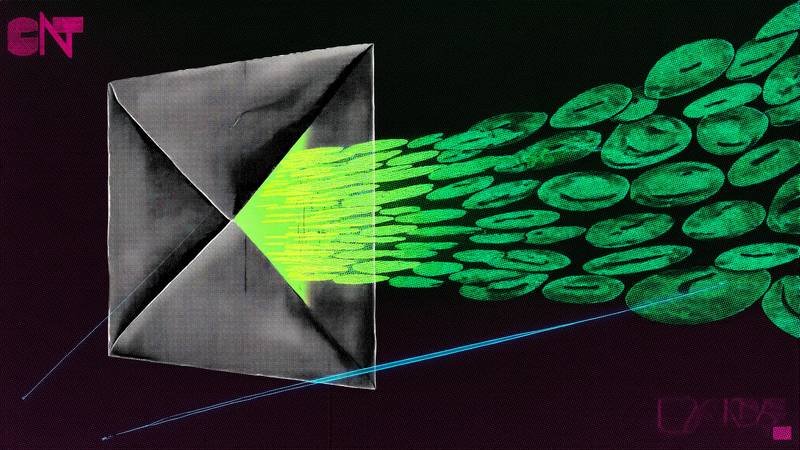
In an effort to strengthen privacy protections across web infrastructure and decentralized applications, the Ethereum Foundation has launched a novel tool known as zkAPI. Designed to decouple user payment credentials from individual service requests, zkAPI leverages zero-knowledge technology to establish a private, prepaid API access model.
As digital services, particularly generative artificial intelligence platforms, become deeply embedded in everyday software, the amount of metadata collected by service providers has expanded dramatically. Traditional API billing models typically require credit cards, bank accounts, or identifiable Web3 wallet addresses tied directly to each data transaction. By breaking this connection, zkAPI introduces a cryptographic barrier between financial identity and usage habits.
Understanding the Mechanics of zkAPI
At its core, zkAPI functions as a cryptographic prepaid mechanism. Rather than issuing a standard API key linked directly to a customer’s account or credit card, the architecture allows users to purchase access credentials in advance using cryptocurrency or privacy-preserving payment channels.
When a request is submitted to an API provider using zkAPI, the system presents a zero-knowledge proof verifying that the caller holds valid, pre-paid credits. However, the proof reveals no identifiable information regarding:
- The specific wallet address used to fund the balance.
- The user’s real-world identity or banking credentials.
- The historical log of previous API calls associated with that account.
This design addresses a long-standing vulnerability in web architectures where service operators can cross-reference payment logs with operational telemetry to construct detailed user profiles.
Early Implementation: OA Chat Integrates zkAPI
One of the earliest applications demonstrating zkAPI in action is OA Chat, an interface designed to connect users with artificial intelligence models. OA Chat has integrated the prepaid zkAPI framework to offer users an alternative payment pipeline that protects their financial identity.
Through this integration, users can pay for AI interactions without linking their personal payment methods or main crypto addresses directly to their chat queries. This setup prevents third-party payment processors from tracking how often or when a user interacts with specialized AI tooling.
Key Limitations: Payment Privacy vs. Prompt Confidentiality
While zkAPI represents a major milestone for financial and metadata privacy, developers and researchers emphasize the importance of understanding its specific operational boundaries.
Specifically, zkAPI separates billing from request routing, but it does not obscure or encrypt the raw content of the requests—such as AI prompts or submitted data payloads—from the underlying service providers.
- What zkAPI Protects: Transactional privacy, account linkage, funding source anonymity, and payment telemetry.
- What zkAPI Does Not Protect: The actual content of the API payload, user prompts, or response outputs processed by the host server.
Because the AI service provider must still process the prompt to generate an answer, the text of the query remains visible to the hosting infrastructure. Consequently, users seeking complete data confidentiality must combine zkAPI with additional privacy solutions, such as local execution, end-to-end encryption, or confidential computing environments like Trusted Execution Environments (TEEs).
The Growing Role of Zero-Knowledge Proofs in Web Infrastructure
The release of zkAPI aligns with the Ethereum Foundation’s broader strategic focus on zero-knowledge cryptography. While ZK technology has historically been associated primarily with Layer 2 scaling solutions like ZK-Rollups, its application in identity management, privacy-preserving credential verification, and decentralized infrastructure is accelerating rapidly.
In the context of the growing AI ecosystem, privacy tools like zkAPI are expected to play a critical role. Autonomous AI agents, decentralized computing marketplaces, and privacy-focused developers increasingly require friction-free payment mechanisms that operate without traditional Know Your Customer (KYC) requirements or invasive tracking routines.
Conclusion
The introduction of zkAPI marks a practical step forward in applying zero-knowledge cryptography to real-world software infrastructure. By separating financial accounting from service utilization, the tool offers a scalable blueprint for privacy-preserving Web3 and Web2 integration. As early implementations like OA Chat demonstrate, zkAPI gives developers an effective method to protect user identities at the payment layer, even as broader challenges around data payload privacy remain an active area of innovation.